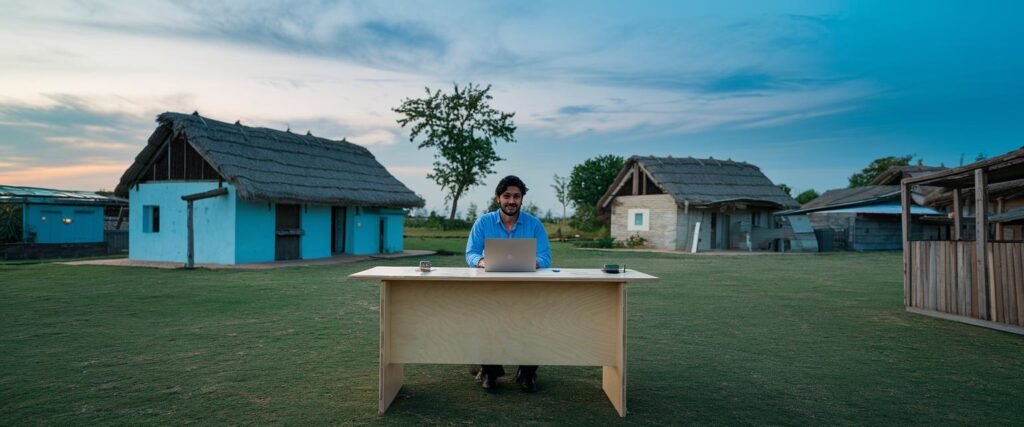
- Small towns in India offer rents up to 70% cheaper than cities
- You can comfortably live under ₹25,000/month in many offbeat towns
- Reliable Wi-Fi and basic healthcare exist—even in remote places
- Expect natural beauty, slower pace, and strong local communities
- It takes time to adjust, but the lifestyle rewards are worth it
Table of Contents
- Why Choose a Small Town in India for Remote Work?
- Top Small Towns to Consider for Remote Living
- Adjusting to Small-Town Life in India
- Practical Tips for Remote Workers in Rural India
- FAQ: Living and Working Remotely in Small Town India
- Conclusion
Tired of the city grind? Imagine waking up to birdsong, sipping chai overlooking lush fields, and still having money left at the end of the month. That’s the reality of small town India living.
Remote work has made it easier than ever to leave crowded cities behind. Whether you’re a freelancer, startup founder, or full-time employee working from home, smaller towns in India could completely change your lifestyle—for the better.
In this blog, I’ll break down what it’s like to live in offbeat India, answer key questions about costs and internet, and share real-world tips for how to live in rural India without sacrificing comfort—or productivity. Having spent the last three years splitting my time between bustling metros and hidden gems across the country, I’ve gathered insights you won’t find in typical travel guides. For more on how to balance work with exploration, check out our digital nomad productivity guide.
Why Choose a Small Town in India for Remote Work?
Lower Cost of Living (Budget Better, Live Better)
One of the biggest reasons digital nomads are choosing lesser-known towns? Money. Plain and simple. Living in cheap places in India can reduce your expenses by half—or more.
- Rent: You can find 1BHK homes in small towns from ₹4,000–₹8,000/month. That’s 3x cheaper than Bangalore or Mumbai.
- Food: Local produce is fresh, healthy, and incredibly affordable. Weekly groceries? Maybe ₹500–₹800 tops.
- Transport: Most places are walkable or auto-accessible. No metro cards or Uber bills piling up every week.
Better Quality of Life
Small towns give you more than tranquility—they give you time.
- Less Stress: No traffic jams. No air pollution choking your lungs. Just slower, breathable days.
- Closer to Nature: Within weeks, you’ll rediscover nature’s rhythm—green landscapes, flowing rivers, and a silence you’d forgotten existed.
- Real Community: Smile at the fruit seller twice, and by next week, she’ll remember your order. Small towns offer big connections.
Experience Authentic, Offbeat India
This isn’t tourist India. This is workshops where sarees are still handwoven, temples that come alive at festival time, and neighbors who’ll invite you for chai just because.
Top Small Towns to Consider for Remote Living
Here are the hidden gems where remote workers can truly build their dream lifestyle. Each combines affordability with just enough infrastructure to keep you connected—without the urban chaos.
| Town | Monthly Cost (Est.) | Internet Reliability |
|---|---|---|
| Gokarna, Karnataka | ₹18,000 – ₹25,000 | Good (Jio/Airtel) |
| McLeod Ganj, Himachal | ₹20,000 – ₹28,000 | Moderate (BSNL/Jio) |
| Pondicherry, Tamil Nadu | ₹22,000 – ₹30,000 | Excellent (Fiber available) |
Gokarna, Karnataka
A quiet beach town with the vibe of early-era Goa. Cowork from cafés with sea views, join early morning yoga, or hit the beach after your client call wraps up. I spent three months here last year and found a perfect balance between work productivity and beachside tranquility.
McLeod Ganj, Himachal Pradesh
Home to the Dalai Lama, mountain trails, and monks using MacBooks. A stunning blend of Tibetan culture and remote lifestyle. Good internet? Yes. Cowork spaces? A few. The community of digital nomads here has grown significantly, creating mini-networks of remote professionals who gather weekly for skill exchanges.
Pondicherry, Tamil Nadu
French colonial charm meets South Indian soul. Colorful lanes, spiritual retreats, and a strong expat community. Ideal for long-term stays and deep work. According to The Broke Backpacker, Pondicherry offers one of the best quality-to-cost ratios for foreign remote workers in South India.
Adjusting to Small-Town Life in India
Cultural Differences
Life here doesn’t come with a user manual. Saying “namaste” instead of “Hi,” eating with your hand, or dressing a bit more conservatively can go a long way.
I remember once asking for “wifi” at a dhaba in Uttarakhand—and getting served “white rice” instead. We had a good laugh. Lesson? Learn some local words early!
Internet and Infrastructure Gaps
You may hit the odd power cut or a week when Jio refuses to work. Always have a backup internet device. Airtel or BSNL tends to cover even remote zones. During monsoon season in Gokarna, I relied on a combination of a local SIM for hotspot and café Wi-Fi when things got dicey at my guesthouse.
Lifestyle Isolation
There were days early on when I didn’t know a soul in town. My lifeline? Local grocery uncles and chai shops. That, and digital nomad groups that helped me meet fellow remote folks in real life.
Understanding these challenges is the first step. Now, let’s explore practical strategies to make your small-town transition smoother and more productive.
Practical Tips for Remote Workers in Rural India
Finding Accommodation
- Start with Airbnb for short stays, then switch to local brokers or word-of-mouth.
- Monthly rents can drop 30% if you commit longer term.
- Always inspect the Wi-Fi before committing. Run a speed test during your viewing.
- Ask about power backup systems—crucial during monsoon seasons.
Choosing Internet Wisely
- JioFiber has scaled well in tier-3 towns. Airtel is a solid second.
- Keep a Jio-Fi or mobile hotspot as your emergency net.
- Some cafés may even offer fiber—ask around!
- For video calls, consider scheduling during non-peak hours (10am-4pm) when networks are less congested.
Building a Productive Routine
Small town life requires structure that you create yourself. I’ve found that starting work early (7-11am) when power and internet are most stable, followed by a long lunch break, and then finishing up in the evening works best. This mirrors local rhythms and avoids the frustration of mid-day power cuts.
Legal & Visa Advice for Foreigners
Tourist visas won’t legally allow ‘working’ in India, but many freelancers stay short-term or hop between yoga programs. Do consult a legal expert if you’re unsure, especially for long-term stays.
Resources like Savory & Partners or the Cheapest Destinations Blog keep updated info on visa regulations and cost comparisons.
FAQ: Living and Working Remotely in Small Town India
Is it safe to live in rural India as a foreigner?
Mostly yes. Just avoid walking alone late at night in isolated areas and listen to the locals. Common sense rules. In three years across multiple small towns, I’ve never encountered serious safety issues.
What’s the best way to find reliable internet?
Check Fiber availability with Airtel, ACT, or Jio. Also ask locals and cafés—they’re surprisingly helpful. The Facebook group “Digital Nomads India” often has town-specific internet recommendations.
How do I deal with power cuts?
Buy a solid power bank, work in cafés with generators, or consider a small UPS if you’re staying longer. Also, plan your most connectivity-dependent tasks (video calls, uploads) during peak power hours.
What Hindi phrases will help?
- “Namaste” – Hello
- “Kitna hua?” – How much?
- “Internet hai kya?” – Do you have internet?
- “Bijli kab aayegi?” – When will electricity return?
Is vegetarian food easy to find?
You’ll find more veg food than non-veg in most small towns—whether it’s thalis, samosas, or paneer rolls. Many religious areas are fully vegetarian.
Can I get decent healthcare in small towns?
Basic healthcare is available in most small towns, but for specialized care, you might need to travel to the nearest city. Always keep emergency contacts handy and consider health insurance that covers evacuation if you’re in very remote areas.
Conclusion
Living in small town India isn’t just about saving money—it’s about getting more from life. More calm. More community. More meaningful mornings.
If you’re ready to explore lesser-known corners of India, follow the trail less traveled. Living in rural India may not be perfect, but it’s powerful. As one digital nomad who stayed in McLeod Ganj for six months told me, “I came for the cheap rent but stayed for the sunrise views and the chai wallah who knew my order by heart.”
The transition takes effort—you’ll fumble with language, battle occasional connectivity issues, and miss big-city conveniences. But the reward? A simpler, richer life that reconnects you with what matters.
Have you lived or worked in a small Indian town? Share your story in the comments. We’d love to hear your tips, tales, or questions about offbeat India living.
Subscribe to our Newsletter for more remote work tips, travel guides, and life beyond the usual!
Ready to make your move to small-town India? Learn how to pack effectively with our minimalist digital nomad packing guide, and make your transition smoother from day one.