Spiritual Travel India: Discover Sacred Varanasi
A guide to balancing remote work with spiritual exploration in places like Varanasi and Rishikesh.
- Yes, you can work remotely from Indian ashrams—just choose wisely and respect the rules.
- Spiritual cities offer peaceful routines that boost focus and creativity.
- Dress, speak, and behave mindfully in sacred spaces.
- Rishikesh and Dharamshala are great alternatives to Varanasi.
- Plan around festivals to stay productive during busy periods.
Table of Contents
- Finding Your Focus: Remote Work in Sacred Varanasi
- Respectful Remote Work: Navigating Culture and Customs
- Beyond Varanasi: Exploring Other Spiritual Hubs for Remote Workers
- Navigating Festivals and Celebrations: Managing Work and Festivities
- FAQ
- Conclusion
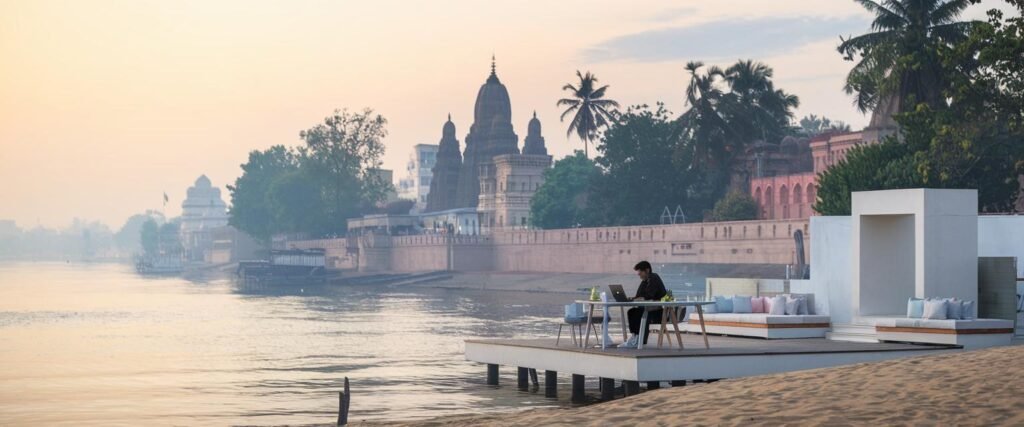
What if your morning started not with cold brew from a high-rise café, but under soft orange skies overlooking the Ganges? Spiritual travel in India isn’t just about ashrams and quiet chants—it’s also about reconnecting with yourself, even during a Zoom call.
I’ve been seeking these deeper connections in my own remote work journey for years now. As more digital nomads search for meaningful backdrops, places like Varanasi aren’t just spiritual centers anymore—they’re becoming peaceful work destinations. In this guide, I’ll help you blend your remote work routine with cultural immersion in sacred Indian cities, sharing my own hits and misses along the way.
Finding Your Focus: Remote Work in Sacred Varanasi
The Allure of Varanasi: A City of Light and Learning
Varanasi is often called the oldest living city on Earth. It’s a place where life and death meet with divine routine. Here, spirituality isn’t an event—it’s a lifestyle. Maybe that’s why more freelancers are choosing to work from Varanasi, letting its slow pace fuel deep work sessions instead of rush-hour stress.
During my own visit last year, I found that watching early morning rituals on the ghats completely reset my work mindset. I’d wake at 5:30 AM (something impossible for me back home), grab my camera, and just sit by the river. There’s something truly grounding about starting your day with chanting instead of Slack pings. When I finally opened my laptop around 8 AM, I’d already had three hours of mental clarity.
Creating a Productive Workspace: Tips for Setting Up Shop
- I found the best Wi-Fi at cafés near Assi Ghat—try Pizzeria Vaatika Café or Open Hand. Both have reliable connections and enough outlets for a full workday.
- Bring a foldable laptop stand if you’re sitting on mattresses or low wooden chairs (which most local cafes use). My neck thanked me!
- Block time for deep work between 9 AM and 1 PM—the city gets busier in the evenings with ceremonies and foot traffic. I learned this the hard way after trying to hit a deadline during the evening aarti.
Embracing the Local Rhythm: Daily Routines and Rituals
Start your day with sunrise on the Ganges, either with a boat ride or just a walk. You’ll quickly get used to the slow mornings, chai breaks, and soft bells ringing from temples—not your usual co-working background noise. I started adding 15 minutes of simple meditation before my first task—surprisingly, it made my 2-hour coding sessions feel effortless.
Respectful Remote Work: Navigating Culture and Customs
Dress Code and Etiquette: Showing Respect in Sacred Spaces
This isn’t Goa. In Varanasi and similar cities, wearing modest clothes—covering shoulders and legs—isn’t optional. It’s respect. Keep shawls or light scarves on hand, especially if you’re working in public places near temples or ashrams.
I made the rookie mistake of pulling out my phone during a small ceremony my first week there. The looks I got taught me quickly: be careful with taking photos during ceremonies. Asking permission goes a long way in sacred spots. Now I keep my phone in my pocket until I’m sure it’s appropriate.
Engaging with the Community: Building Positive Relationships
Simple gestures matter. Learning to say “Namaste” or “Dhanyavaad” (thank you) opens doors to real conversations. Support local chai shops instead of chains—I befriended a family running a tiny stall near my guesthouse who eventually introduced me to their extended family. You’re working in someone’s spiritual home—treat it that way.
Ethical Considerations: Minimizing Your Environmental Impact
- Use refillable water bottles to avoid buying plastic. I invested in a good filter bottle and haven’t bought bottled water since.
- Book with locally-run guesthouses who recycle or use solar power. My place in Varanasi had solar heating and composted food waste.
- Try tuk-tuks or walking before hopping into cabs for short distances. The narrow alleys are often faster on foot anyway!
Beyond Varanasi: Exploring Other Spiritual Hubs for Remote Workers
Rishikesh: The Yoga Capital of the World
After the intensity of Varanasi, Rishikesh felt like a breath of fresh air—literally. The mountain air just feels clean—both mentally and physically. It’s become a hotspot for many seeking Rishikesh remote work options. Yoga schools and cafes are everywhere, and many ashrams even allow stays with decent internet access.
I spent three weeks at an ashram near Ram Jhula that offered designated “silence hours” between 10 AM and noon. Those became my golden hours for writing—I knocked out two major projects during those sessions alone. If you’re considering similar Indian ashrams, look for ones that balance spiritual practice with practical amenities for remote workers.
Dharamshala: A Himalayan Haven
Home to the Dalai Lama and the Tibetan government-in-exile, Dharamshala is full of monasteries where peace isn’t just a wish—it’s the default. When I needed to escape digital overwhelm and reset my creative energy, I spent time in a small tea house overlooking the mountains. If cooler weather, Tibetan culture, and monastery gardens sound like your kind of workspace, this might be your next destination.
Other Spiritual Destinations to Consider
| City | Why Go |
|---|---|
| Auroville, Tamil Nadu | Community-style living with emphasis on sustainability and several co-working spaces |
| Bodh Gaya, Bihar | Home of Buddha’s enlightenment tree—great for meditation and surprising Wi-Fi quality |
| Pushkar, Rajasthan | Desert oasis with spiritual fairs and stunning lake views for creative inspiration |
Navigating Festivals and Celebrations: Managing Work and Festivities
Understanding the Festival Calendar: Planning Your Work Schedule
India’s festival calendar is packed year-round. Whether it’s Diwali, Holi, or smaller local events, planning ahead is crucial. I’ve learned to block off noisy or sacred days in my calendar and keep clients informed well in advance. Sometimes you’ve just got to embrace the chaos—I once tried working through a small procession outside my window and eventually gave up, joined in, and made up the hours later.
Participating Respectfully: Immersing Yourself in Local Traditions
Festivals are your fast-track to understanding a place. During Ganga Aarti in Varanasi, I put away my camera after the first five minutes and simply absorbed the experience. Just make sure you’re not constantly pulling out your phone or crossing into sacred procession paths. Watch, learn, and then join with humility.
Staying Productive During Festivals: Tips for Focused Work
- I swear by my noise-canceling headphones during loud celebrations—worth every penny when you’re on deadline during a festival.
- Book guesthouses in quieter neighborhoods during major festivals. I once chose a place near Bhelupur during Dev Deepawali and could work peacefully while still being a short walk from the action.
- Front-load energy-heavy tasks before events start—trust me, you won’t want to tackle complex problems after a full day out in festival energy.
FAQ
Can you realistically work remotely from a spiritual ashram?
Yes, you absolutely can. Some ashrams like Parmarth Niketan in Rishikesh or certain communities in Auroville offer Wi-Fi and understand that visitors may need to work. But always check their policies—I called ahead to three ashrams before finding one that allowed digital devices in designated areas. And don’t forget to carry a mobile hotspot as backup; mine saved me multiple times when the power went out.
How can you be respectful while working in sacred cities?
Keep noise low, avoid public calls in religious areas, and dress modestly. I’ve found that learning basic greetings and following simple temple etiquette—shoes off, no photos unless invited, and staying aware of local customs—goes a long way. When in doubt, I watch what locals do and follow their lead. Most Indians appreciate the effort, even when you make mistakes.
What are some essentials to pack for remote work in India?
- Universal adaptor + surge protector (Indian power fluctuations are real!)
- Portable charger & backup hotspot (I use a Jiofi device)
- Loose, respectful clothing (linen pants and light cotton shirts have been my go-to)
- Mosquito repellent & hand sanitizer (practical necessities)
- Offline maps & Hindi phrasebook (even basic phrases open doors)
Conclusion
Spiritual travel in India isn’t for everyone—but for those who crave purpose in their workday, it’s truly energizing. These cities aren’t about speed. They slow you down to bring clarity—creatively, mentally, and professionally. My own productivity and happiness have improved dramatically since incorporating these sacred spaces into my work routine.
The biggest lesson I’ve learned? Balance is everything. Some days I’m up at dawn for a sunrise boat ride before opening my laptop. Other days I’m deep in work mode, pausing only for chai breaks. It’s this rhythm between immersion and productivity that makes remote work in spiritual India so rewarding.
Whether you choose to automate your work and simplify your packing before your trip, or join one of our retreats, you’ll return feeling changed—not just by India, but by what you created while you were there.
Ready to turn your work-from-anywhere dream into reality? Join our community and get insider tips straight to your inbox.
→ Contact us for upcoming spiritual retreats for remote workers
Sources:
Native Nomad Life, 2023,
The Boho Living, 2022