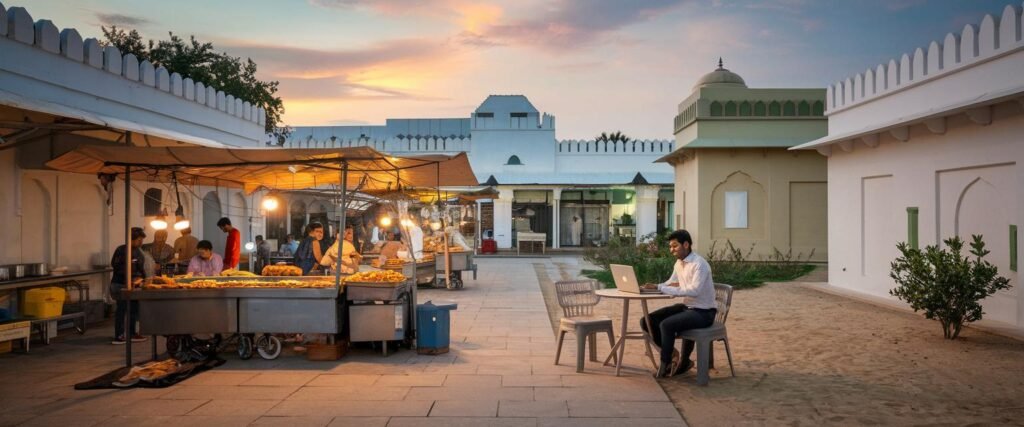
- Indian markets come alive after sunset with street food, crafts, and friendly chaos
- Top evening picks: Sarojini Nagar in Delhi, Colaba in Mumbai, and Manek Chowk in Ahmedabad
- Bargain smart—start at 50% of asking price, smile, and be ready to walk away
- Wear comfortable shoes, carry small bills, stay alert, and embrace the local atmosphere
- Markets offer perfect opportunities to connect with fellow nomads and experience India’s creative energy
Introduction
Picture this: you’re in Delhi, the sun has dipped, and you’re weaving through Indian markets, drawn in by the aroma of momos, the shimmer of silk scarves, and the calls of vendors offering “best price only for you.” This is India after dark—and trust me, it’s an entirely unique experience.
Whether you’re a remote worker exploring post-work scenes or a digital nomad chasing authentic experiences, India’s night markets pack charm, chaos, and cheap eats all in one place. I’ve explored quite a few myself, hopping between projects while living in Mumbai, Bangalore, and Goa—and the evening market trail never gets old.
In this guide, we’ll explore 10 of the most unique evening finds in Indian markets—from fashion bargains in Delhi to street food heaven in Ahmedabad. We’ll cover travel tips, local eats, bargaining strategies, and where to find that handcrafted gem you didn’t know you needed.
Wherever you’re based—an Airbnb in Jaipur or a coworking space in Kochi—you’ll want to bookmark this one. Let’s go.
AI tools for smarter travel can also help make your shopping day smoother.
Table of Contents
- Top 10 Indian Markets to Explore After Dark
- Food, Finds, and Hidden Gems: What to Look For
- Master the Market: Navigating Crowds and Bargaining Like a Pro
- FAQ: Your Indian Market Questions Answered
Top 10 Indian Markets to Explore After Dark
Forget generic shopping—here’s where real adventure begins:
-
Colaba Causeway, Mumbai
A favorite from my own freelancing days in Mumbai. It’s perfect for grabbing budget fashion, boho jewelry, books, and unique souvenirs. The street snacks—like bhel puri and kebabs—are a bonus. Busy but worth it.
(Mumbai markets) -
Dilli Haat, Delhi
Not your average night market in Delhi. This is a curated crafts village with rotating stalls from different states of India. Great for sandalwood products (₹200-1500), mithai, Phulkari dupattas—and thalis that feel like a food tour across the country.
(night market delhi) -
Commercial Street, Bangalore
Trendy, high-energy, and affordable. Commercial Street is where I picked up my first client meeting shirt at 9 PM for under ₹500. The street transforms after work hours—perfect for clothes, kolhapuri slippers, and tea breaks after a coworking session.
(shopping in India) -
New Market, Kolkata
It’s easy to get lost here in the best way. From flowers to silk sarees, this market spills into the lanes like a living organism. When I visited during Durga Puja season, the energy was electric. Hold your breath when bargaining—it’s intense but fun. -
Gokulam Market, Mysore
It’s small, peaceful, and culturally rich. A good stop after a yoga session. Think sandalwood soaps, Mysore silk scarves (₹400-2000), and melt-in-your-mouth local snacks like mysore pak. -
Sarojini Nagar Market, Delhi
Backpackers love it, students live for it. This night market in Delhi is all about branded export rejects at unbelievable prices. Pro tip: I snagged a Zara shirt here for just ₹180—proof that patience pays off. Dig deep, bargain harder. -
Crawford Market, Mumbai
Chaos in the best flavor. You’ll find spices, dry fruits, glassware, and more. It’s a content creator’s dream with colorful visuals and sounds. I brought back some gorgeous hand-painted jars from here that now hold my desk supplies in every coworking space I visit. -
Hazratganj Market, Lucknow
Less street vibe, more elegance. Known for Chikankari work (prices ranging ₹500-5000) and well-lit streets, this is where tradition meets style. Don’t skip the kebab stalls here either—I still dream about them. -
Arpora Saturday Night Market, Goa
If you’re freelancing from Goa and haven’t been here yet, go. It’s seasonal (November to May) but offers incredible vibes—live music, handmade products, international bites, and artists from all over the world. I’ve met more fellow digital nomads here than anywhere else. -
Manek Chowk, Ahmedabad
A hidden gem. This place does a full transformation—gold shops by day, food heaven by night. Try the chocolate sandwich. Yes, it’s weirdly brilliant.
Food, Finds, and Hidden Gems: What to Look For
Must-Try Street Food by City
| City | Must-Try Foods | Average Price (₹) |
|---|---|---|
| Mumbai | Vada Pav, Pav Bhaji, Bombay Sandwich | 30-150 |
| Delhi | Chole Bhature, Momos, Ram Ladoo | 40-200 |
| Kolkata | Kathi Rolls, Puchkas, Jhalmuri | 25-120 |
| Ahmedabad | Dhokla, Fafda Jalebi, Khakhra | 50-150 |
Best Buys for Travelers
- Handmade jewelry (₹100-2000) – Best finds at Colaba and Sarojini
- Block print scarves and bags (₹250-1000) – Look for these in Jaipur markets
- Sandalwood items from Mysore (₹200-1500) – Soaps, figurines, incense
- Tea blends and spice kits (₹150-500) – Perfect for gifting or kitchen upgrades
- Mini artwork pieces (₹300-2000) – Great remote work decor to personalize temporary spaces!
Can’t-Miss Corners
- Colaba’s old bookshops tucked behind the stalls – I found rare travel guides here for under ₹200
- Local artists painting live at Goa’s Arpora market – Watch your souvenir being created
- Sarojini’s back-lane stalls—they get the freshest export overstock
- The chai corners at Commercial Street where freelancers gather after 7 PM
Master the Market: Navigating Crowds and Bargaining Like a Pro
Smart Moves When Exploring
- Go within 30 minutes of opening (or 90 minutes before closing) for fewer crowds
- Wear closed shoes—market floors can be unpredictable
- Keep cash—especially Rs.10/20/50 notes for small purchases and bargaining
- Stay aware in crowds but relax into the experience
- Take photos sparingly and always ask permission from vendors
My Bargaining Style
I usually start by offering 50% of the asking price. Vendors expect it and even enjoy the negotiation. Keep a friendly vibe, add a “bhaiya, thoda kam karo” (brother, make it less), and be ready to walk away. It works more than half the time.
One evening at Colaba, I spotted a leather journal I wanted. The vendor asked for ₹800. I smiled, offered ₹350, and eventually we settled at ₹450 with a small bookmark thrown in. Bundle two items for a better deal—it almost always works!
Safety Practices
- Keep valuable devices hidden or at home
- Use a crossbody bag you can keep in front of you
- Drink only bottled water (₹20) or fresh coconut water (₹40-60)
- If you’re solo, stick to areas with good lighting and plenty of people
- Save market location on your maps app before heading out
FAQ: Your Indian Market Questions Answered
Is it safe to visit Indian markets at night?
Yes, most popular markets are safe. Just avoid poorly lit back lanes and be mindful of your belongings. Trust your instincts—if something feels off, move to a busier area. In three years of exploring markets across India, I’ve never faced safety issues by following these basic precautions.
What’s the best time to visit a night market?
Right after sunset is ideal—around 6:30–7:00 PM. That’s when vendors are fully set up and the place starts buzzing, but before it gets too crowded (usually 8:30 PM onwards).
How much should I bargain?
Start at 40–50% lower than the asking price. Use smiles and casual tactics, like comparing prices from nearby stalls. Remember, bargaining is expected but should remain respectful.
Best way to get around?
Walk whenever possible—it’s the best way to discover hidden corners. For longer distances, use a prepaid or app-based auto-rickshaw. Always confirm the price before starting your journey.
Do vendors accept cards?
Rarely. UPI payments (Google Pay, PhonePe) are increasingly common now, but carry cash to be safe—especially small bills for easier transactions.
Conclusion: Experience the Magic of Indian Markets
Indian markets at night aren’t just about shopping—they’re places to observe, connect, eat, and experience local culture. Whether you’re freelancing from Delhi or calling Goa home for a month, carve out an evening to explore. You’ll leave with stories, connections, and perhaps a fantastic deal on a kurta or two.
The market experience represents everything I love about working remotely in India—the sensory richness, unexpected connections, and constant discovery that makes each day an adventure.
So which market are you visiting first? Share your favorite spots, unexpected finds, or best bargain wins in the comments—I love swapping stories. If this guide helped, share it with your travel circle.
Want more local insights like these? Subscribe to our newsletter to get updates, travel hacks, and smart work ideas delivered to your inbox.
P.S. If you’re planning longer stays in market cities, check out our guide on finding the best coworking spaces near cultural hotspots for productivity tools, work-friendly spots, and more.