Indian Trains: Honest Hacks for Foreign Travelers
Indian Trains: Honest Hacks for Foreign Travelers
Introduction
Trust me, you haven’t truly experienced India until you’ve traveled by train – and I’m speaking from experience.
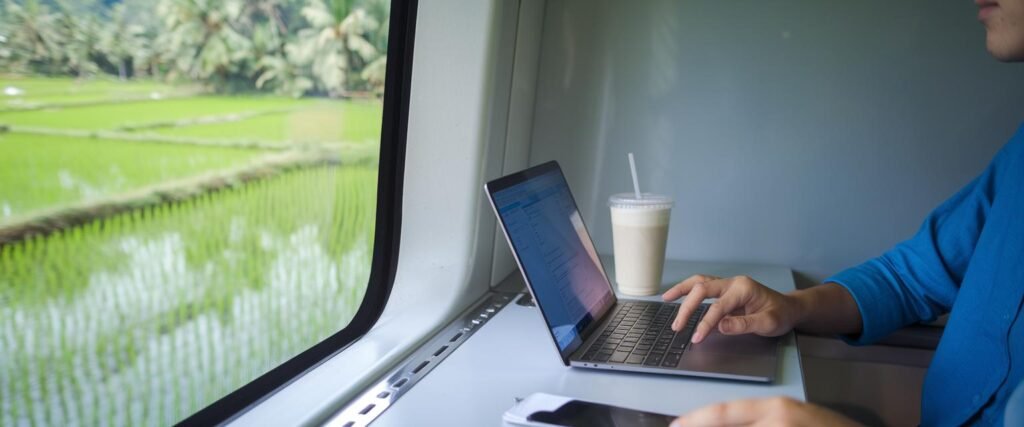
There’s something grounding about sipping chai while watching the world go by—rice fields, people waving at crossings, kids playing cricket next to the tracks. For remote workers or digital nomads on a flexible timeline, Indian trains give you the freedom to explore India affordably and authentically.
This guide gives you a clear, no-nonsense breakdown of how to travel India by train—booking tips, travel classes, real hacks from the road, and what to expect. At Working With View, we’re all about smart, remote-friendly travel, and this is one of the most fulfilling ways to experience India.
(Also, if you’re planning gear for the ride, check out our AI-powered packing guide).
Quick Takeaways
- Indian trains are one of the best ways to see the real India – safe, scenic, and budget-friendly.
- There are many travel classes – from ultra-budget to luxury – choose based on comfort and route.
- Foreign tourists can book online via agents, Cleartrip, or by creating an IRCTC account (with some patience!).
- IndRail passes offer flexibility but may not suit short trips.
- Pack light, secure your stuff, and enjoy the ride!
Table of Contents
1. Understanding the Indian Railway System
2. Choosing Your Class of Travel on Indian Trains
3. Booking Indian Trains as a Foreigner: A Step-by-Step Guide
4. Essential Tips for Long Train Journeys in India
5. FAQ Section
6. Conclusion
Understanding the Indian Railway System
India’s railway network is the fourth-largest in the world—over 67,000 km of track. I’ve always seen it as more than just public transport; it’s a social journey. Millions ride daily, from short commutes to overnight journeys across states.
When I first arrived in India, the sheer size of the railway network felt overwhelming. But after a few journeys, the patterns became clear.
Types of Trains:
– Passenger trains – These stop at every small station. They’re super local and slow, but great for short distances and seeing small towns.
– Mail/Express trains – These are quicker with fewer stops, ideal for medium distances.
– Superfast and Rajdhani/Shatabdi – Premium services with better speed and amenities. As a remote worker, I found these reliable for important travel days.
Train Numbers Made Simple:
Each train has a 5-digit code that tells you something about it. The first digit often indicates the train type (like 1 for long-distance express), and the rest identify route and zone. Don’t worry about memorizing this—apps will show you everything you need to know.
PNR Status:
Every ticket has a unique number (PNR). This is your golden ticket to information—use it to check your current booking status (especially important for waitlisted tickets) on apps or Indian Railways’ website.
According to Lonely Planet’s guide on Indian train travel, nearly 23 million passengers use Indian Railways every day—that’s more than the entire population of many countries!
Choosing Your Class of Travel on Indian Trains
Don’t let those train class codes intimidate you – I’ve navigated this system extensively and can break it down simply. Your choice of travel class makes all the difference to your comfort, budget, and overall experience.
Common Travel Classes Explained
* AC First Class (1A) – Private or semi-private cabins with locking doors. Luxury option with attendants.
* AC 2-Tier (2A) – Two levels of berths with curtains for privacy. Clean, comfortable, and secure.
* AC 3-Tier (3A) – My personal sweet spot for overnight journeys. Three levels of berths, air conditioning, but no curtains.
* AC Chair Car (CC) – Reclining seats for day journeys. Perfect for 4-6 hour trips.
* Sleeper Class (SL) – No AC, open-air windows, three tiers of berths. Budget-friendly but can get crowded.
* Second Sitting (2S) – Basic benches for short journeys. Very economical but uncomfortable for long trips.
* Unreserved/General (UR) – The true local experience—often standing-room only. Avoid with luggage or for long distances.
Class Comparison Table
| Class | Price | Comfort | AC | Security |
|---|---|---|---|---|
| AC First Class (1A) | Very High | Private cabins, spacious | Yes | High |
| AC 2-Tier (2A) | High | Curtains, 4-berth layout | Yes | High |
| AC 3-Tier (3A) | Mid-range | 6-berth bays | Yes | Moderate |
| AC Chair Car (CC) | Low to Mid | Day seating only | Yes | Moderate |
| Sleeper Class (SL) | Low | No AC, open bays | No | Low |
| Second Sitting (2S) | Very Low | Benches | No | Low |
| Unreserved (UR) | Cheapest | Crowded, standing room only | No | Very Low |
My Personal Class Recommendations
I’ve traveled in almost every class across India, and here’s what I’ve found:
For overnight journeys: 3AC offers the best value-to-comfort ratio. On my Delhi-Varanasi trip, I managed to get solid sleep and even did some work the next morning before arriving.
For day trips under 5 hours: Chair Car is perfect and affordable. I’ve comfortably worked on my laptop during these journeys.
For budget travelers wanting authentic experience: Sleeper Class is manageable and sociable—just secure your belongings and bring a light blanket.
For luxury travelers: 1AC or 2AC are comfortable, but I’ve found 2AC offers 80% of the comfort at 60% of the cost.
Booking Indian Trains as a Foreigner: A Step-by-Step Guide
As a foreigner, booking Indian trains initially felt like solving a puzzle. After numerous bookings (and a few failed attempts), I’ve figured out what works best.
IRCTC for Foreigners: The Official Route
The official booking platform is IRCTC, but it comes with challenges:
– Phone verification hurdles: The system often requires an Indian phone number for OTP verification.
– Payment gateway issues: Many international cards are rejected during checkout.
– Registration complexity: The sign-up process requires multiple verification steps.
When I first tried to register for IRCTC from my hotel in Delhi, I spent nearly two hours trying different workarounds. Eventually, I succeeded by using a local friend’s phone number and a specific international credit card that worked with their gateway.
Easier Alternatives That Actually Work
If IRCTC seems too complicated (it often is), these alternatives have saved me time and frustration:
– 12GoAsia: My go-to platform. Simple interface, accepts international cards, and provides e-tickets.
– Cleartrip: Another reliable option that’s more user-friendly for foreigners.
– Local travel agencies: Available in tourist areas, they charge a small fee but handle everything.
IndRail Passes: The Tourist Option
Think of these like Eurail passes. Buy one for a set number of days and ride multiple trains.
My take on IndRail passes: During my 3-month stay in India, I calculated that individual tickets were actually cheaper for my itinerary. However, for intense travel schedules (4+ train journeys per week), these can save money and booking hassle.
Where to Buy: Through IRCTC tourism or online agents in your home country before arrival.
Tatkal Booking: The Last-Minute Solution
Tatkal is a special quota for last-minute bookings that opens one day before travel.
My Tatkal success story: When I needed to suddenly travel from Jaipur to Mumbai for a client meeting, all regular tickets were sold out. I used the Tatkal quota, logging in exactly at 10:00 AM when bookings opened. Within 3 minutes, I secured a 3AC berth. The key was being prepared with all details entered and ready to submit the moment the system opened.
Tatkal Tips:
– Be online exactly at opening time (10:00 AM for AC classes, 11:00 AM for non-AC).
– Have multiple devices/browsers ready in case one fails.
– Pre-fill passenger details to save critical seconds.
Essential Tips for Long Train Journeys in India
Long train journeys across India have given me some of my most productive remote work days and most memorable travel experiences. Here’s how to make the most of them.
Pack Smart for Train Travel
My train journey essentials:
– Quick-dry microfiber towel
– Wet wipes and hand sanitizer
– Lightweight sleep sheet (especially for Sleeper Class)
– Power bank + charging cable (outlets are limited and often unreliable)
– Small combination lock and chain for securing luggage
– Noise-canceling earbuds (game-changer for sleeping or working)
– Reusable water bottle with filter
– Instant coffee packets (for those early morning views)
Stay Safe and Secure
Safety on Indian trains has never been a major issue for me, but common sense goes a long way:
– I always secure my backpack to the luggage rack using a chain and lock
– Valuables stay in a small day pack that never leaves my side
– Upper berths offer more privacy and security for sleeping
– I’m friendly but cautious with overly curious fellow passengers
– Women travelers: consider booking the ladies’ quota for added comfort
Food & Water Strategies
During my 36-hour journey from Mumbai to Kolkata, I discovered that food options vary wildly depending on the train:
– Pantry car meals: Basic but filling – usually rice, dal, curry, and bread
– Platform vendors: I’ve found fresh samosas, chai, and fruit at many stations
– Station restaurants: Larger stations have decent food courts
– Bringing your own: Nuts, dried fruits, instant noodles, and biscuits are my staples
My food hack: Use the Zomato or Swiggy apps to order food delivered to specific stations along your route. On my Chennai-Hyderabad journey, I had a restaurant meal delivered right to my train window during a scheduled stop!
Internet and Connectivity
As a remote worker, staying connected is crucial:
– Train Wi-Fi is rare and unreliable
– I use a local Airtel SIM with a generous data package
– Service can be spotty in rural areas – download work materials in advance
– Tethering to my phone has gotten me through many work sessions
On my Bangalore to Delhi overnight train, I managed to join a video call with clients during a longer station stop when the signal was stronger.
Managing Time and Expectations
Indian trains operate on their own timeline. According to Rachel’s Ruminations travel blog, only about 70% of long-distance trains arrive on time.
– Build in buffer days before important meetings or flights
– Use apps like “Where is My Train” for real-time updates
– Embrace the unpredictability as part of the journey
FAQ Section
Q: Which class is best for budget travelers?
A: Sleeper Class (SL) is the best value for budget travelers. It’s affordable with reserved berths, though you should bring your own bedding. For slightly more comfort with a modest increase in price, 3AC is worth considering for overnight journeys.
Q: How far in advance should I book tickets?
A: For popular routes or travel during Indian holidays, book 2–3 months in advance. For less busy routes or off-peak travel, 2–3 weeks is usually sufficient. During my year traveling India, I found that booking opening day (120 days before departure) was only necessary for major holidays like Diwali.
Q: What happens if my train is delayed?
A: Check live status using the RailYatri or Where’s My Train app. Your ticket remains valid regardless of delay. For significant delays, have a backup plan for accommodations or connecting transportation. I once had a 6-hour delay on a Delhi-Agra train but was still able to use my ticket without any issues.
Q: Is it safe for solo female travelers to travel on Indian trains?
A: Yes, with proper precautions. Book AC classes when possible, request upper berths for privacy, use the ladies’ quota when booking, and stay aware of surroundings. Many female digital nomad friends have traveled extensively by train across India without issues by following these guidelines.
Q: What if I can’t get an IRCTC account?
A: Use Cleartrip, 12GoAsia, or a local booking agent. These platforms are often more foreigner-friendly and accept international payment methods. I personally used 12GoAsia for my first five train bookings in India before setting up an IRCTC account.
Q: Can I work effectively on Indian trains?
A: Yes, with preparation. AC Chair Car and higher classes have enough space for laptops. Power outlets are available but inconsistent, so bring a power bank. Download work materials in advance as internet connectivity varies. I’ve completed entire coding projects during long train journeys by planning accordingly.
Q: Are there luxury train options available?
A: Yes, India has several luxury tourist trains like the Palace on Wheels, Maharajas’ Express, and Golden Chariot. These are expensive (starting at $500+ per night) but offer a 5-star hotel experience on rails with guided excursions. They’re aimed at tourists rather than digital nomads or budget travelers.
Conclusion
If you’re building your remote career while traveling, Indian trains aren’t just transportation—they’re an immersive journey that can actually enhance your travel experience.
I’ll never forget working on my laptop as the train wound through the Western Ghats, stopping for chai breaks at tiny stations, and having unexpected conversations with local entrepreneurs. These train journeys have given me both productive work days and authentic cultural experiences that wouldn’t be possible flying between destinations.
My experience booking that first Sleeper Class journey from Delhi to Varanasi taught me that the initial complexity of Indian train travel is absolutely worth navigating. The overnight journey gave me stunning sunrise views over the Ganges that I still think about years later.
Don’t overthink it or let the booking process intimidate you. Choose a route. Make the booking through one of the platforms I’ve suggested. Let the window scenes become your changing office view, and embrace the journey as much as the destination.
Looking for more practical tips on balancing remote work and travel? Check out our complete guide to budget travel for digital nomads, or reach out via our contact page if you’re planning an extended workation in India.
Recent Posts

Europe Remote Work: 7 Essential Underrated Spots

Nomad Budgeting Success: Optimize Your Travel Finances